Category: Finance

  • The first law of money: Wealth creation starts with 9 words

    The first law of money: Wealth creation starts with 9 words

    Wealth creation is a process described by a few essential laws of money. If you live by these rules your chance of financial success is very good. And yet the majority of people will struggle financially as they go through life. Why is this?   You may have the desire to make more money and fulfil all your dreams, but if you don’t know how to get the process going, you cannot expect to achieve your goals.     Wealth creation has to start somewhere. Identifying where and how to begin is probably the most difficult step. But once you get the ball rolling it becomes very easy from there onward.  

    Let me try and shed some light on this:   Suppose I ask you to paint a newly built brick wall with a colour of your choosing. Will you be able to do it? I’m sure you would if you are familiar with the process of preparing and painting a wall. Once you know where to start, the process becomes a lot easier: Buy the plaster and paint, select your paintbrushes and building tools, acquire a ladder if necessary, plaster the wall, apply one or two layers of undercoat and then the final coats of paint. Whola, job well done!     The point is if you know how to go about doing a certain task, the only thing you really have to do is get off your butt and do what you have to do. The same thing works with making money.   As a working individual caught in the rat race, building wealth is governed by a standard universal framework. There are 9 words which describes the entire process:    

    Use (1) your (2) surplus (3) income (4) to (5) purchase (6) income (7) generating (8) assets (9).

    Wealth creation is commonly understood to be an exercise in investing. Have a look at the figure below.   The conventional thinking is to save part of your monthly salary in a pension fund/401k over a long period of time so that when you retire one day you have something to live on.   One can see that investing is planning for the future. It’s a delayed wealth creation strategy. Instead of accumulating wealth today, investors set cash aside for use during retirement, 20 or 30 years down the line.   With this approach the hope is that one’s investments will increase in value over time.   Wealth creation sets off on a completely different path. Where investors save part of their salary (before costs) in a savings vehicle like a pension fund, wealth creators focus on spending part of their salary (after costs) on income-generating assets.   It may not make sense but spending is the name of the game not saving. The amount you spend and what you spend it on is vitally important to achieve financial success. I cannot stress this enough.    

    Building wealth begins with surplus income, the spare cash in your bank account after catering for all your necessary living expenses. These may include things like health insurance, rates and taxes, food and housing expenses. They exclude luxuries like travelling, eating out, shopping for fancy shoes or handbags and buying expensive motorized toys like boats and cars.     How you spend your active income will have a direct influence on the amount of surplus income you have. Do you really need cable TV? What about those nights out? Are they really all necessary? What monthly expense can you cut out?

    • You must have a critical look at your spending patterns because surplus income determines how quickly you can start building wealth. The less you spend on things that you want (as opposed to things that you need), the more income you will have to spend on assets that will make you wealthy.

    It goes without saying that if you are unemployed or do not earn an income, it is impossible to build wealth. When I first started my journey, I was employed as a full-time researcher at a university in Johannesburg.   My surplus income fell way short of being classified as desirable, which meant that my potential to create wealth was literally zero!   As tough as it was at that stage, I only had one option, and that was to increase my disposable income. Over the next few weeks, I started looking for a job. Yup, a higher paying job, one that would give me a significant amount of surplus income to help me escape the rat race.

    I eventually found something in the financial industry, and I am grateful to say that formal employment was exactly what I needed to help kick-start my journey to financial freedom.   The important question you need to ask is, ‘How will I increase my surplus income?’ It may mean finding another job or changing your spending behaviour. Every dollar saved is an extra dollar you can use to start building wealth.   But that’s only possible if you spend each dollar on the right things, namely income-generating assets.   When starting out, it won’t do you any good to blow your free cash on ‘assets’ that don’t produce income, like holidays or expensive clothing.   After I started working for a boss, I pumped all my surplus income into real estate. I cut out all unnecessary expenses, put a budget in place and used all my spare cash to build rental income streams.  

    This did not happen overnight. It took me about four years to get into a position where I could use the rental income from my property businesses to purchase more assets. At this stage, the income from your assets (together with the surplus income from your salary) can be used to purchase more income-generating assets.   This is an essential point to reach for every wealth creator. It represents a new stage, one of wealth acceleration and essentially early retirement.

      To summarize, the first law of money highlights two important points:

    1. Surplus income is the catalyst for building wealth.
    2. Surplus income must be used to purchase income-generating assets, which in turn must be used to purchase more assets.

    The resulting income streams will help you reach financial independence and eventually freedom.  

    Cheers for now. 
  • What Dr. Martin Luther King Jr. Taught Us About Finances

    What Dr. Martin Luther King Jr. Taught Us About Finances

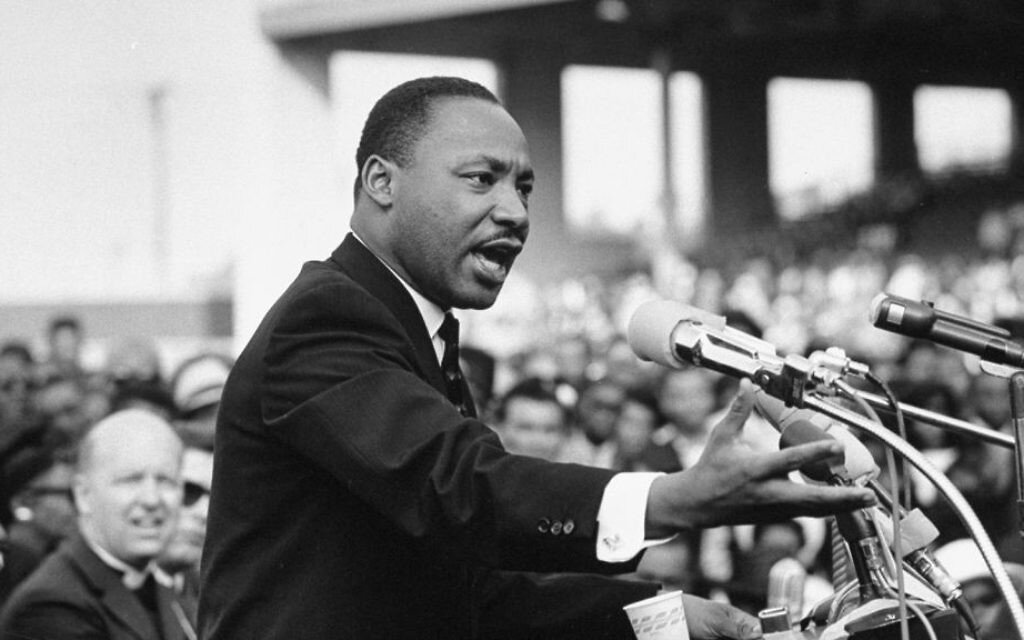
    Dr. King believed that social inequality was largely derived from poverty. He was a proponent of financial literacy and achieving financial independence. In fact, in 1966 MLK was a signatory to the Freedom Budget, which declared a war on poverty published by the A. Philip Randolph Institute. While the proposal was never passed into law, it provides us important lessons which we can strive for today.

    On this important holiday, we honor MLK by discussing some of the financial thoughts of Dr. King.

    Living within your means and budgeting

    In Dr. King’s “The Drum Major Instinct” sermon, he warned about spending beyond your means. Martin Luther King said that the “drum major instinct” that people have, could be detrimental to their freedom.

    What he meant by this “instinct” is that people always want to be front-in-center and showing-off, just like a drum major. One way people satisfy this instinctual feeling is to buy flashy and expensive items well beyond their personal budgets.

    To quote Dr. King: “Do you ever see people buy cars that they can’t even begin to buy in terms of their income? You’ve seen people riding around in Cadillacs and Chryslers who don’t earn enough to have a good T-Model Ford. You know, economists tell us that your automobile should not cost more than half of your annual income… But so often, haven’t you seen people making five thousand dollars a year and driving a car that costs six thousand? And they wonder why their ends never meet.” 

    In his sermon, MLK teaches us an important lesson about budgeting: don’t spend beyond your means. The month of January begins a new year with many New Year’s Resolutions. Why not make your New Year’s Resolution financially motivated? The new start to a year is a perfect time to revisit your budget. Very simply:

    1. Write down your gross monthly income (before tax)
    2. Write down your necessary expenses—line-items you must pay no matter your situation, such as taxes, rent, and utilities.
    3. Is this number smaller than your monthly income? Hopeless yes, because this means you have some room for discretionary spending—items that you can treat yourself to with your leftover income, such as vacations or going out to dinner.
    4. If not, you need to either make more money—by starting a side-hustle or asking for a raise—or you may need to spend less—finding cheaper rent, shopping around for cheaper car insurance, or refinancing your mortgage and other loans.

    As MLK says—if you make $5,000 a year but spend $6,000 a year, you won’t ever make ends meet! Need help with your budget? Download our free budget worksheet by clicking here. Upon completion, contact our financial advisors at Johndrow Wealth Management for additional guidance.

    Don’t keep up with the Joneses

    In this same sermon, Dr. King warns us to not keep up with the Joneses. Dr. King states: “And they just live their lives trying to outdo the Joneses. They got to get this coat because this particular coat is a little better and a little better-looking than Mary’s coat. And I got to drive this car because it’s something about this car that makes my car a little better than my neighbor’s car.”

    Purchasing items simply to outpace your neighbor will never bring you true happiness. In fact, it may stress you out even further, especially if you’re taking on debt simply to outdo your colleagues.

    In a study on the outperformance of peers, neuroscientists Michael Lindner and Klaus Fliessbach at the University of Bonn in Germany found that when people outdid their counterparts, they had higher level of activity in the same part of the brain that activates when taking drugs, winning money, or experiencing “schadenfreude,” which is deriving pleasure or joy because of another person’s misfortune.

    Quite obviously we want to avoid finding joy in these sorts of unhealthy ways. For this reason, trying to outpace or earn more than your neighbor could be detrimental both to your wallet and mental health.

    Instead, you should create a financial plan for the next few months, 1-year, 5-years, 10-years, and beyond. This way you are only competing against yourself regardless of what people have around you. You will receive joy from attaining small goals which plug into a greater purpose.

    Create very realistic and specific financial goals using the “SMART-goals” method. Make sure you set short-term goals that will build on each other. Psychologists find that in general humans prefer immediate gratification over future gains. If you achieve your short-term goals, you’ll achieve that instant gratification, while still building upon your long-term goals.

  • A brief history of money: What’s your take?

    A brief history of money: What’s your take?

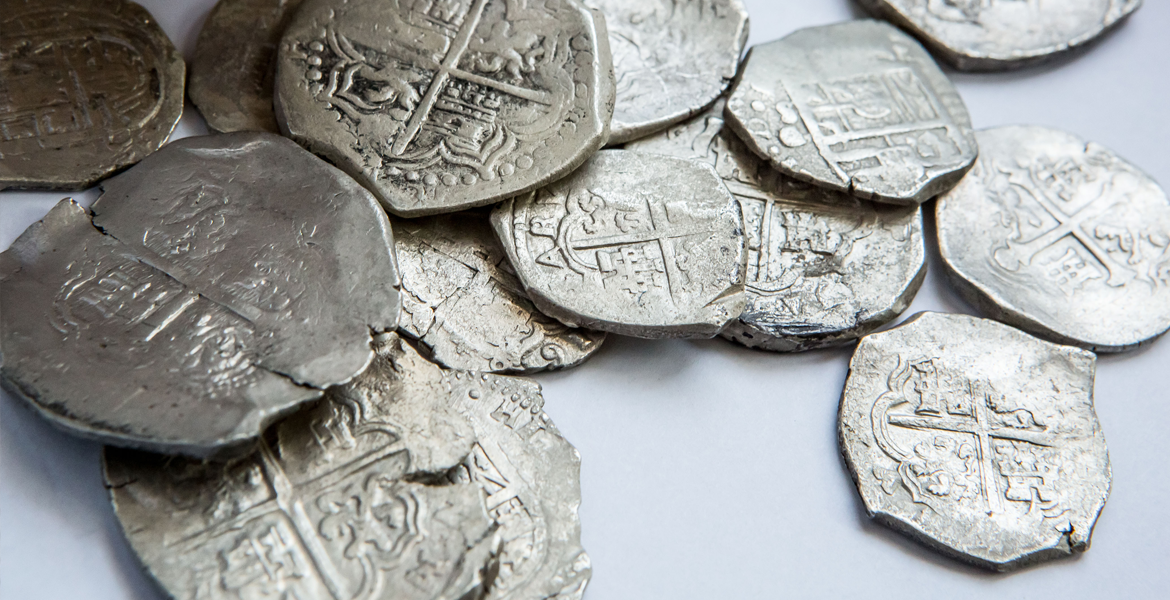
    Let’s admit it. We can’t live without money. It’s just that important. But even though it may be old and crumpled paper vegging inside your wallet, it has a great history. Great as it may be, the history of money as it pertains to your understanding and perceptions is what’s important.   Money is old. Very old. It’s been with us for a long time and almost every century it changes its look and value. The first ever money originated in Mesopotamia. There, money was made from seashells and beads. But then, it was used as a simple form of trading.   Before money, trading was the primary means of exchange. People did not use paper money or coins. Instead, they bartered. In our generation, jewelry is used to decorate ourselves. But hundreds of years ago it was also money. Gold, Copper, Silver etc. Today, when we buy something we don’t exchange physical goods, we use paper and coins.  

    ►Money shapes the way we do things

    1. Depending on the country, money is called by many names. In the United States or Australia, we call it dollars. In London, we call it pounds. In the Philippines, we call it pesos. But most of the time, we just call it dollars.   Forex traders use different currencies to make even more money. They try and profit from speculating and making certain bets on market movements. For other investors and business owners, money is treated as a tool to acquire assets and generate passive income, the key to financial freedom.   

    2. Money also has different value. One dollar is equivalent to about eight rand in South Africa. So if we earned one hundred dollars and we flew to South Africa and exchanged the dollars into rands the total will be eight hundred rand.   How many dreams out there revolve around wanting to be a millionaire in what ever currency? A million dollars or rand or pounds in the bank may be a worthy financial goal to achieve. And many people will push damn hard to make sure it happens.   But a monthly passive income ultimately defines how you live day-to-day. First define your ultimate standard of living in your own currency. Determine how much passive income you need every month to realise the lifestyle. Then put a plan in place to make it happen.       

    3. Money has different meanings. If you value the history of money,  it’s seen as a means of buying things, a reason for living so to speak. It’s sought to extract the pleasures out of life, buy cars like Ferraris or VIP concert tickets to Katy Perry or Maroon 5 and to maintain a good standard of living.   For others, money is treated as a reward for doing great things, by starting businesses and servicing mankind with innovative products and services. In which group do you fall? Is your goal to chase money or generate an income through doing what you love?  

    4. Money is two faced. The good side is that we can send our children to the best schools, start charities, make donations and help other people. We can save lives by building fancy hospitals, hire the best surgeons and start global initiatives like the World Food Programme. It makes us feel good, can excite us and motivate one to do great things.   The bad side is not the money, but the love for it. You know that saying, ‘money corrupts’. It can ‘tempt’ people to do the wrong things, literally drive people to do crime. Apparently, money is one of the major reasons for divorce in countries like the U.S. and South Africa (Don’t quote me on this). It can destroy relationships, create jealousy and push people into clinical depression.   How will you manage the two faces of money?  

    5. Money is difficult to understand, or so the thinking goes. Why do people stray away from the topic of finances? Why leave it for the accountants and bankers to worry about when it forms an integral part of your life? It’s one of those grey boxes that gets tucked away in the garage, never to be opened again, relegated to the desk of a perceived financial expert.    Don’t under-estimate your abilities. Understanding finances and the world of wealth creation can open up a great deal of opportunity for you. By ignoring it, your life may be filled with mediocrity. Money is a tool that enhances the quality of life. See it for what it is.   The history of money has given us a working framework. it shapes our perceptions. It has value. It’s a powerful tool that wields influence. It can be used for good and bad. It can change your life and make it perfect. It can also keep you trapped if you adopt the wrong mindset.